







If your dog is constantly scratching, shaking their head, or dealing with recurring digestive issues, their diet might be playing a bigger role than you think. Food allergies in dogs are more common than many owners realize—but with the right approach, they can be managed effectively.
Here’s a clear, practical guide to understanding and handling them.
Food Allergies vs. Food Intolerances
Although often confused, food allergies and food intolerances are not the same thing.
A food allergy involves the immune system. The body mistakenly treats a specific ingredient as harmful and triggers a reaction.
A food intolerance, on the other hand, is a digestive issue. It happens when your dog’s system struggles to break down certain ingredients, without involving an immune response.
Both conditions can cause discomfort, and both deserve attention. Knowing the difference becomes especially important when working with your veterinarian to identify the root cause.
Common Food Allergens in Dogs
While dogs can react to many ingredients, some triggers appear more frequently than others. The most common include:
- Animal proteins such as beef and chicken
- Dairy products like milk and cheese
- Grains including wheat, corn, and soy
These ingredients are widely used in commercial dog food, which is why they often show up as allergens. This is also where novel proteins—ingredients your dog has never eaten before—can make a big difference.
Recognizing the Symptoms
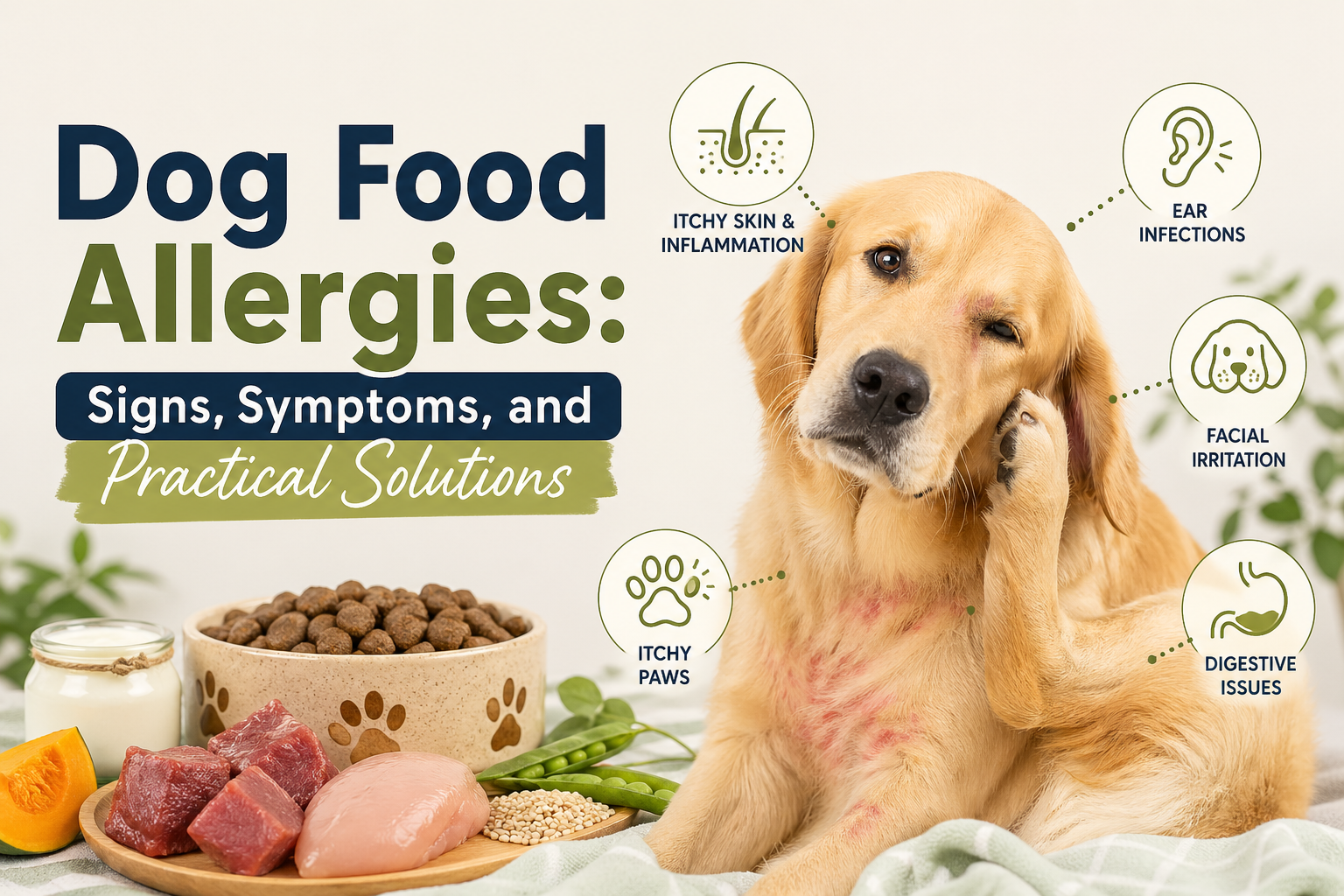
Food allergy symptoms aren’t always obvious and can easily be mistaken for other issues. Keep an eye out for:
- Persistent itching or scratching
- Ear infections or frequent head shaking
- Licking or chewing paws
- Skin irritation, especially around the face or belly
- Digestive problems such as diarrhea or vomiting
Because these signs can overlap with other conditions, it’s important not to jump to conclusions without proper evaluation.
The Elimination Diet Approach
An elimination diet is considered the most reliable way to identify food sensitivities. While simple in concept, it requires consistency and patience.
The process typically involves:
- Switching to a diet with limited, carefully selected ingredients
- Maintaining that diet for several weeks
- Monitoring for improvement in symptoms
- Gradually reintroducing ingredients one at a time
If symptoms improve during the trial, it strongly suggests that something in the previous diet was the trigger.
Consistency is critical. Even small amounts of the wrong food—like treats or table scraps—can disrupt the entire process.
Why Novel Proteins Help
Novel proteins are ingredients your dog hasn’t been exposed to before. Because the immune system doesn’t recognize them, the likelihood of a reaction is much lower.
Some examples include:
- Camel: Lean, highly digestible, and uncommon in typical dog diets
- Turkey: A milder alternative to chicken, often better tolerated
These options are frequently recommended for dogs with suspected food sensitivities, especially during elimination diets.
Choosing a Limited Ingredient Diet (LID)
For dogs with sensitive systems, a limited ingredient diet can be a smart long-term solution. When selecting food, pay attention to:
- Short ingredient lists – fewer components mean fewer potential triggers
- Clearly named proteins – specific labels like “chicken” are better than vague terms
- Minimal additives – avoid hidden ingredients such as unspecified “natural flavors”
- Single carbohydrate sources – easier to track reactions
- Absence of common allergens – such as wheat, soy, dairy, and eggs
In many cases, simpler is better.
Fresh, gently cooked meals can also be beneficial. They tend to retain more moisture, support digestion, and reduce exposure to heavily processed additives.
Working with Your Veterinarian
If you suspect a food allergy, your veterinarian should be your first step. Many conditions—like environmental allergies, parasites, or skin infections—can mimic food-related symptoms.
A vet can help:
- Rule out other causes
- Guide you through an elimination diet safely
- Recommend appropriate dietary options
Keeping a food diary is also incredibly helpful. Tracking what your dog eats and when symptoms occur provides valuable insights for diagnosis and treatment.
Final Thoughts
Food allergies can be frustrating, but they’re far from unmanageable. With careful observation, the right diet, and guidance from a professional, most dogs can return to a comfortable, healthy life.
If you’re considering a dietary change, start with small, informed steps—and don’t hesitate to seek expert advice.
Leave a Reply