





If you’ve ever dealt with a dog that has an upset stomach, you know how frustrating it can be. Maybe it’s been a few days of loose stools—or maybe it’s been dragging on for weeks. Someone suggests probiotics. The pet store has shelves full of them. Your vet casually mentions one. A friend insists their dog improved overnight after using a powder.
So you try one… and you’re left wondering: did it actually help, or did the problem just resolve on its own?
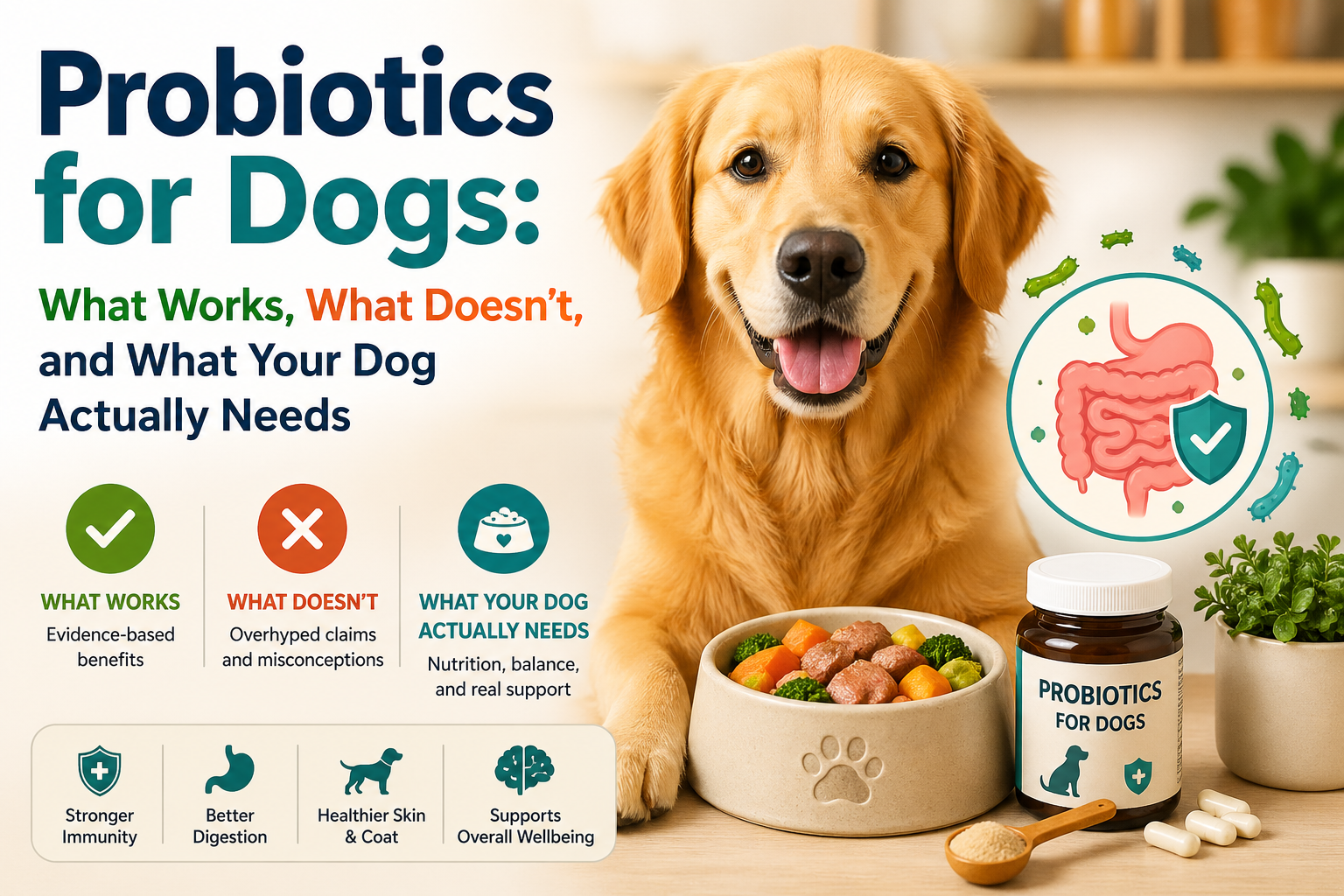
Probiotics for dogs are everywhere right now—added to kibble, packed into treats, sold as capsules or powders. They all promise the same thing: better gut health. But behind that promise lies a mix of real science and a fair amount of marketing hype. The difference between something that truly works and something that just sounds convincing often comes down to details you won’t see on the label.
To be clear, probiotics can be helpful. But they’re not a cure-all. And what often gets overlooked is this: your dog’s everyday diet has a much bigger impact on gut health than any supplement you add on top.
Fresh, balanced meals rich in prebiotic fibres nourish the bacteria already living in your dog’s gut. Probiotics try to introduce new bacteria from outside. Both approaches matter—but knowing which one your dog actually needs right now makes all the difference.
What’s Really Happening Inside Your Dog’s Gut
Your dog’s digestive system is home to trillions of bacteria—an entire ecosystem working together. These microbes help break down food, absorb nutrients, protect the gut lining, and support the immune system.
When this ecosystem is balanced, everything runs smoothly. Digestion is consistent, stools are normal, and your dog has steady energy. But when that balance is disrupted, problems start to appear: reduced bacterial diversity, an increase in harmful microbes, and digestive issues.
The gut is also deeply connected to other systems in the body. Around 70% of the immune system resides there, and emerging research links gut health to skin conditions, recurring infections, and even behavior like anxiety.
So supporting gut health isn’t just about preventing diarrhoea—it’s about supporting your dog’s overall well-being.
What Probiotics Can (and Can’t) Do
A probiotic is defined as a product containing live microorganisms that provide a health benefit when given in the right amounts. That definition is important—because not all products meet it.
Where probiotics do work well
Research shows that certain probiotics can help dogs with acute (sudden) diarrhoea recover faster. In clinical studies, dogs given specific probiotic strains returned to normal stools sooner than those without treatment. Some probiotics have even performed similarly to antibiotics in mild cases—without the downsides of antibiotic use.
So if your dog suddenly gets diarrhoea and is otherwise healthy, a well-formulated probiotic can genuinely help shorten the episode.
Where probiotics fall short
For chronic digestive issues, the results are less impressive. Studies show that while probiotics may provide some additional benefit, the biggest improvements come from dietary changes—not the supplement itself.
If your dog has ongoing symptoms like:
- Persistent soft stools
- Fluctuating appetite
- Gas or occasional vomiting
…a probiotic alone is unlikely to solve the problem. These cases usually require proper veterinary evaluation and a targeted diet.
What about healthy dogs?
In healthy dogs, probiotics may provide subtle benefits—small immune support or minor shifts in gut bacteria. But these changes are often not noticeable in everyday life.
In other words, probiotics can help—but they’re not transformative on their own.
What Actually Builds a Healthy Gut
Across research and veterinary guidance, one message is consistent: probiotics work best when the diet is already strong.
Think of it like this:
- Probiotics = adding new seeds
- Diet (prebiotics) = building healthy soil
Prebiotic fibres—found in foods like pumpkin, banana, oats, and sweet potato—feed the beneficial bacteria already living in your dog’s gut. A diet with diverse fibre sources supports a wider range of bacteria, creating a more stable and resilient system.
That diversity is key.
If your dog’s diet lacks variety or quality, adding a probiotic is like scattering seeds on poor soil—it won’t lead to lasting results.
Dogs showing signs like low energy, dull coats, or ongoing digestive issues usually need a dietary upgrade first—not just another supplement.
When Probiotics Actually Make Sense
Probiotics are most useful in specific situations—not as an everyday “just in case” solution.
They make sense when:
- After antibiotics
Antibiotics disrupt gut bacteria. A targeted probiotic can help restore balance. - During food transitions
Switching diets can upset digestion. Probiotics can ease the adjustment period. - During acute diarrhoea
Short-term use can reduce severity and recovery time. - As part of a vet-guided treatment plan
Especially for chronic gut issues—alongside diet changes and medical care.
Outside of these situations, daily probiotics for healthy dogs offer minimal noticeable benefit.
How to Choose a Good Probiotic
Not all probiotics are created equal. Here’s how to spot one that’s actually worth using:
- Specific strains listed
Look for full names like Lactobacillus rhamnosus GG. Vague labels like “probiotic blend” don’t tell you much. - Clear dosage (CFU count)
Effective products usually contain billions of CFUs. If it’s not listed, that’s a red flag. - Evidence in dogs
Products tested specifically in dogs are more reliable than those based on human studies. - Proper storage guidance
Heat can kill live bacteria. Storage conditions matter—especially in warm climates.
Also, give probiotics time. For general support, results may take weeks. For diarrhoea, improvement should appear within a few days.
Prebiotics vs Probiotics: Know the Difference
This is where many dog owners get confused.
- Probiotics = live bacteria added to the gut
- Prebiotics = fibres that feed existing gut bacteria
Prebiotics come naturally from whole foods like fruits, vegetables, and grains. They support long-term gut health by strengthening the existing ecosystem.
If you had to choose one approach for a healthy dog, prebiotics through a quality diet are more effective and sustainable.
The Bottom Line
- For sudden diarrhoea, probiotics can help—this is well supported.
- For chronic issues, they’re only part of a bigger solution that includes diet and veterinary care.
- For healthy dogs, the benefits are subtle at best.
The real foundation of gut health isn’t in a supplement—it’s in the bowl. A balanced diet rich in prebiotic fibres, quality protein, and proper hydration does the heavy lifting.
Probiotics can be a helpful addition. But they’re not the foundation—they’re the finishing touch.
If you’re unsure what your dog actually needs, the most valuable step isn’t trying another supplement. It’s having a clear conversation with your vet about diet, symptoms, and the bigger picture of your dog’s health.
Because in the end, no label can replace understanding what’s really going on.
Leave a Reply